• Skip to primary navigation
  • Skip to main content

Signature Fiberglass Pools Chicago Swimming Pool Builder Illinois

Fiberglass Swimming Pool Builder serving Chicago and Illinois

(630) 845-1145 info@signaturepoolschicago.com
  • Pool & Spa Models
  • Pool Info
    • Pool Pricing
    • Pool Buying Process
    • Why Fiberglass?
    • Patio/Deck Options
    • FAQ’s
    • Downloads
  • About Us
  • Gallery
  • Contact
  • Receive an Estimate
  • Show Search
Hide Search

News and Updates

How to keep your Fiberglass Swimming Pool clean

SignaturePools · Jul 31, 2009 ·

Inground Fiberglass Pool-Riveria 30'

One of the most common, and simplest questions to answer about your in-ground swimming pool is how to keep it sparkling clean.  There are actually three components at play in the cleaning process:

Circulation- Make sure your pool equipment is properly circulating the water through the system.  Clean the pump basket regularly and make sure the pump is not drawing any air through the skimmer or a loose fitting.  Your filter pump is at the heart of the circulation process, and is what draws water out of the pool (through the skimmer and main drain), and discharges clean water back into the pool (through the return jets).

Filtration- As the pump is circulating water through the equipment, it passes through some kind if filtering system.  All of our pools at Signature Pools and Spas use cartridge filters to clean the water.  Making sure these cartridges are free of debris is a major component in maintaining crystal clear water.  Follow your manufacturer’s instructions and clean these cartridges several times a season.

Sanitation- The third and final component in maintaining a clear swimming pool is water sanitation.  Although there are many ways to kill bacteria, chlorine products are most commonly used in swimming pools to eliminate any biological organisms.  Use test strips or a chemical test kit to make sure you have the right amount of chlorine in the pool water.

If you have other questions about keeping your swimming pool clean, please feel free to contact us at 630.845.1145 or visit us on the web at: www.sigpoolschicago.mysites.io

All About Swimming Pool Tile

SignaturePools · Jul 30, 2009 ·

Signature Pools and Spas - Colonial - In ground fiberglass pool Chicago, Illinois

A great option to consider with your in ground fiberglass swimming pool is the addition of a tile perimeter around the pool. This feature can add a personal touch to any backyard water-scape, and will add to the beauty of your swimming pool design.

There are literally hundreds of colors, sizes, and styles to choose from when picking a pool tile. Whether you’re looking for something to match an existing deck, house color, or a natural element in the yard, tile can give the look of your very own Signature Pool. We partner with National Pool Tile Group for the majority of our pool tile needs. Their selection and quality of products has benefited our customers over the years.

Take a look at just a few examples of what a perimeter tile can add to your very own fiberglass swimming pool.

 Composite Pools - Lexington Pool & Alexandria Spa - in ground fiberglass pools Chicago, Illinois

Signature Pools and Spas - Apollo Fiberglass Pool Chicago, Illinois

These two examples incorporate tile both around the perimeter of the pool as well as on a raised spa and water feature.  The spa on the left blends the pool tile right into the spa wall, while the elevated water feature uses a contrasting tile color to accentuate it against the natural landscape in the background.

If you have questions or would like further information please call 630.845.1145 or visit us at:

www.sigpoolschicago.mysites.io

2009 Master of Design Winner!

SignaturePools · Jul 30, 2009 ·

signature-mod-pic

Signature Pools and Spas is honored to receive the 2009 Masters of Design award for fiberglass swimming pools.  Published in the July issue of Pool and Spa News, Signature Pools is featured along with an elite class of pool builders from around the country; companies all recognized for their outstanding designs and installations of in ground swimming pools and spas.  This nationally recognized award is issued just once a year- and published by an industry leader in swimming pool news, development and design.

Check out the full article here…

In the design and development of the project, Signature Pools featured a Leisure Pools Elegance 33′ fiberglass pool with many additional features.  Laminar water features, a sheer discent waterfall over the spa, and fiber optic lights are just some of the touches that gives this project the ‘Signature Look’. 

Signature Pools is proud and excited to receive the recoginition, but would also like to congratulate the other contributers and winners in the various catagories.

Chlorine Generators, T-Cells, and Saltwater Pools: Mystery or Magic?

SignaturePools · Jul 29, 2009 ·

ic-40

 These three terms are all used to describe the same thing: natural chlorine generation using sodium chloride. As magical (or complicated) as this may sound this process of generating chlorine is just some basic chemistry put to work. Simply put, salt is added to swimming pool water and then broken into the two chemical compounds that make up the salt (sodium and chloride). The chloride is then released back into the water providing sanitation for the pool.

This process of breaking salt into its elements is commonly known as electrolysis. Inside the pool equipment is a ‘cell’ with several metal plates that are mildly charged with a positive and negative current. As the saltwater pass by the cell, the current causes a reaction to happen, breaking down the salt into its two chemical compounds (NaCl). The sodium is collected onto the plates, while the chloride is released back into the water.

This system of sanitation is a very popular alternative to the chlorine feeders of the past. Prior to the salt chlorination development, most people added chlorine tabs or ‘pucks’ to an in-line feeder in the pool equipment. As water flows past these pucks, they dissolve into the water providing chlorine to the pool. The disadvantage to this type of system is two fold:


  1. You must remember to ‘feed the pool’ chorine on a regular basis. Customers with this type of chlorine delivery system must refill the tabs ever week to maintain proper sanitation levels in the pool.
  2. You can taste, smell, and feel the chlorine. The reaction is exactly what you might expect- burning eyes, faded swimming suites, and the residual smell of chlorine on your skin once you get out of the water.

A chlorine generating salt systems does not have these problems. Chlorine is constantly being produced by the salt in the water and you only need to add salt once or twice a season. The only way to loose salt from the water is by adding fresh water to the pool. Salt cannot be “burnt off” by the sun like chlorine or otherwise evaporate over time. Only the addition of fresh water from rain or a garden hose will deplete the amount of salt in the pool. Secondly, because the chloride is produced in its natural state, there is no smell, taste, or feel of chlorine in the pool water. No more burning eyes or faded hair!

The only maintenance necessary on the salt cell is a cleaning every now and then. Just like the oil change reminder on many modern cars, the system tells you when it is time to clean the cell (typically once a month). Follow the simple instructions from the manufacturer for the cleaning procedure and you’re ready to get back to the pool!

If you have further questions about chlorine generators, feel free to contact Signature Pools and Spas at 630.845.1145 or visit us at: www.sigpoolschicago.mysites.io
Fiberglass Pools vs. Vinyl Pools vs. Concrete Pools: What’s all the fuss?

Todd Emmerson · Jul 28, 2009 ·

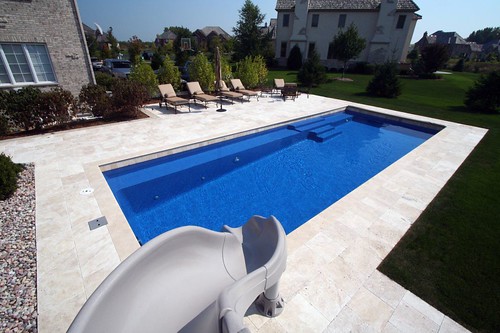
Finished Project- Grand Elegance

 Families deciding to install an in ground swimming pool can face dozens of decisions in the process, but none is more important than deciding on what KIND of pool to build in the first place. You may be thinking- “What do you mean? I want an in ground pool, that’s all!” Well yes, that may be true, but the type of pool you choose to build today will impact your life for years to come.

The three most popular types of in ground pools are fiberglass, vinyl, and concrete. In the past many companies only dealt with building one type of pool, but with the rising popularity of fiberglass pools we have seen many concrete and vinyl pool companies either start building fiberglass pools exclusively or adding fiberglass pools to what they currently build. As you will see below all three of these pool types have advantages and disadvantages.

Let’s take a look at the three major categories of in ground pools and highlight the benefits and downfalls of each.

Fiberglass Swimming Pools: Fiberglass pools are constructed as one piece shells in an offsite factory controlled setting. The pools are then set into the excavated site in your backyard, back filled with sand and stone, and then finished with the patio of your choice (concrete, pavers, stone, etc.)

Advantages: Fiberglass swimming pools are generally less expensive than an equivalent concrete pool, but more expensive than vinyl. However, because there is no re-surfacing, re-plastering, or finish to re-apply on the pool, there are not any major maintenance expenses down the road. The saying “Do it once, and you’re done!” truly does apply to fiberglass swimming pools. Also, because the surface of the fiberglass is a non-porous material, algae cannot adhere to the pool walls and chemicals are not leached from the pool walls. Fiberglass pools always have steps and benches built into your shell in the same finish as the rest of your pool. Construction time is much quicker with a fiberglass swimming pool as well. It typically takes 1-2 weeks to build a fiberglass pool.

Disadvantages: Fiberglass pools are limited in size and shape. Fiberglass pools are available in sizes from as small as a spa all the way to approximately 40’ x 16’. Because fiberglass pools are built as a one piece pool they can be difficult to install at certain properties due to access restrictions.

Concrete (Gunite) Pools: Concrete Pools are essentially rebar walls with concrete “sprayed” on top to create the pool vessel. Plaster is then troweled over the concrete to give the final surface of the pool.

Advantages: Concrete pools can be built into any size or shape. If I wanted the letter ‘J’ for Jim built in my back yard- No Problem! Concrete pools can be designed to fit your exact length, width, and depth specifications. Steps and benches can be added almost anywhere you choose.

Disadvantages:

Concrete pools are the most labor-intensive type of pool to build, and in the mid west are generally the most expensive to build as well. Although a concrete pool may sound strong, think of any sidewalk or house foundation over time. Concrete always cracks- no matter what. Especially with the freeze and thaw cycles in the Midwest, concrete of all types is stressed and strained every season. Additionally, the plaster on concrete pools needs to be maintained and re-surfaced ever 7-10 years. This means some major costs down the road to keep your pool up and running. Plaster resurfacing can easily run into the $5000 – $10,000 range for residential pools. Also, the porous surface of the plaster allows for algae to grow in the crevices of the pool finish and leaches harmful chemicals into the pool. This means that you will constantly be adding even more chemicals to the water, trying to keep everything balanced. Construction time on a concrete pool is typically 10 – 12 weeks.

Vinyl Liner Pools: Vinyl pools are constructed of steel walls with a vinyl liner on top that acts as the surface of the pool.

Advantages: Vinyl liner pools are typically the least expensive type of in ground swimming pool. Also, you are able to construct a wide variety of shapes, sizes and depths in the construction process and match the vinyl material to fit the pool shape.

Disadvantages: Because of the lower initial cost, most customers do not realize that vinyl liner pools are actually more expensive to own in the long run. Over time the vinyl gets wrinkles, fades dramatically, pulls away from the pool wall, and can get tears in the material. Some customers have had good success with a vinyl liner pool, but the truth is that over time, every liner must be replaced. Furthermore, as with concrete pools, algae will form in the pores of the vinyl and makes it difficult to keep a vinyl pool clean. Chemical treatments are similar to a concrete pool, as are the costs associated with replacing the liner. Additionally with a vinyl pool built in benches are very rare and steps will not match the color of the rest of your pool. Construction time of a vinyl pool can take 6-8 weeks depending on the size and shape you choose.

We hope this explanation of the various kinds of in ground swimming pools will help you make a decision that best fits your lifestyle, budget, and needs as a homeowner. If you have further questions or would like more information about swimming pools, please contact us at 630.845.1145 or visit us on the web at www.sigpoolschicago.mysites.io.

  • « Go to Previous Page
  • Page 1
  • Interim pages omitted …
  • Page 3
  • Page 4
  • Page 5
  • Page 6
  • Page 7
  • Interim pages omitted …
  • Page 10
  • Go to Next Page »

Copyright © 2026

  • Home
  • About Us
  • Pool Info
  • Blog
  • Gallery
  • Testimonials
  • News
  • Contact Us